Promotional & Branded T-Shirts

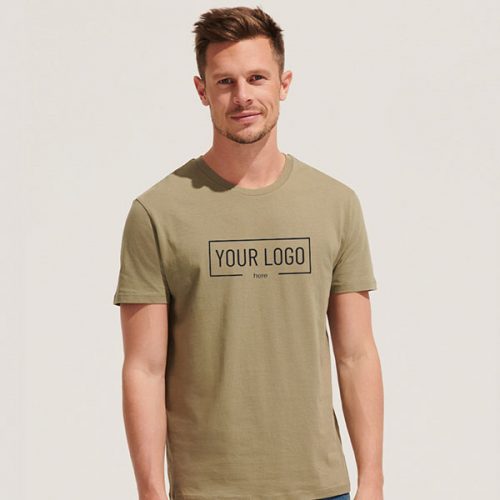
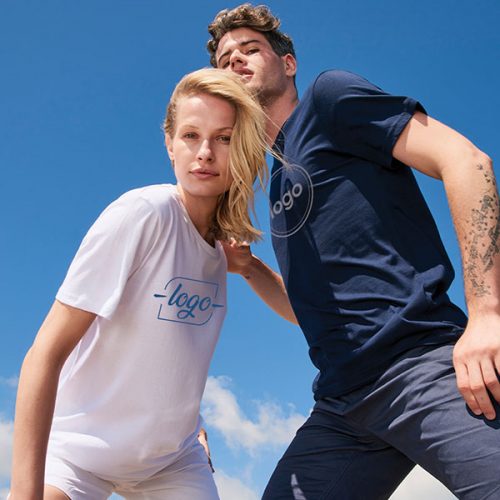
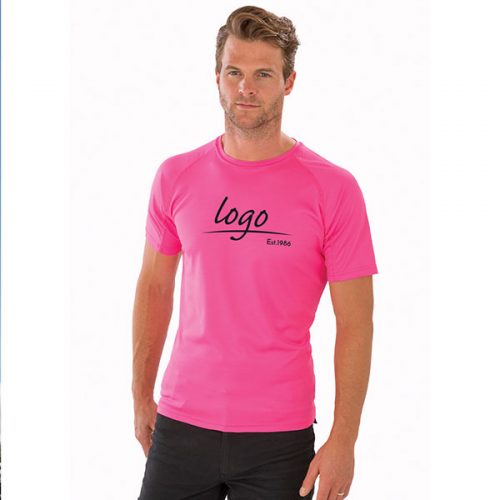
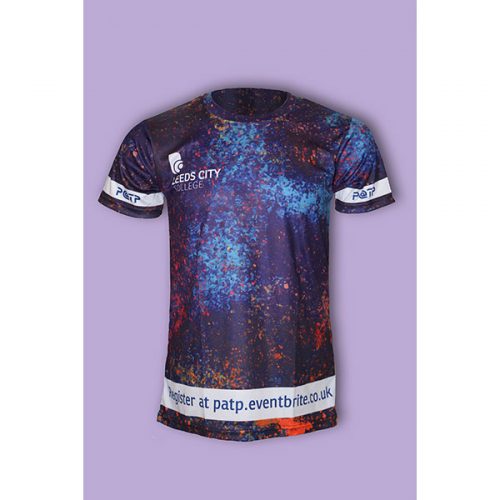
Branded T-shirts and promotional T-shirts designed for corporate branding, events, team uniforms and giveaways. Comfortable, versatile and highly visible, these T-shirts are a popular promotional choice for businesses of all sizes.

Showing 1–50 of 76 resultsSorted by price: low to high

Showing 1–50 of 76 resultsSorted by price: low to high

Quick Procurement Summary:

  • Best For: Staff uniforms, trade shows, charity events, onboarding packs, retail teams, product launches and bulk promotional giveaways.
  • Popular Options: Lightweight cotton, premium ringspun cotton, heavyweight T-shirts, performance tees, organic cotton and recycled fabric styles.
  • Branding Methods: Screen printing, DTF transfers, DTG printing and embroidery for selected heavier garments.
  • Ordering: Mixed sizes and colours available, with artwork proofing before production.
  • Delivery: UK-wide tracked delivery, with local support for Preston, Lancashire and Northwest businesses.

Written by Ben Ward, BusinessGiftUK.com · Last updated 5 July 2026

Choosing the Right Branded T-Shirts for Your Business

Branded T-shirts are one of the most versatile promotional products you can buy. They work as event uniforms, staff workwear, giveaway merchandise, charity clothing, retail teamwear and campaign apparel. The right T-shirt turns your logo into something people actually wear, which means your brand keeps being seen long after the exhibition stand has been packed away or the campaign has ended.

The best option depends on how the T-shirts will be used. A large exhibition giveaway needs a different garment from a premium staff uniform. A charity fun run may need lightweight, affordable printed T-shirts in high volumes, while a hospitality or retail team may need a softer, smarter shirt that can handle repeated washing. This guide explains the main choices so you can order with confidence.

What Type of Custom T-Shirt Do You Need?

The biggest mistake buyers make is choosing on unit price alone. A very cheap T-shirt can be fine for a one-day giveaway, but it may not be the best choice for staff uniforms, retail teams or merchandise people are expected to wear repeatedly. Start with the use case first, then choose the garment and branding method around it.

Your RequirementRecommended T-ShirtBest Branding Method
Exhibitions & GiveawaysLightweight cotton or value T-shirtsScreen printing for larger runs
Staff Uniforms180gsm+ ringspun cotton or polycotton stylesDTF, screen print or embroidery for selected garments
Charity Events & Fun RunsBudget cotton or performance T-shirtsScreen print or DTF transfer
Retail & Hospitality TeamsPremium fitted, softstyle or organic cotton T-shirtsSmall chest print, sleeve print or embroidery
Eco CampaignsOrganic cotton or recycled material T-shirtsWater-based print, DTF or subtle branding

Understanding T-Shirt Fabric Weights

Fabric weight is usually shown in GSM, which means grams per square metre. A higher GSM usually feels thicker and more substantial, while a lower GSM is lighter and often more cost-effective for large promotional campaigns. GSM is not the only sign of quality, but it is a useful starting point when comparing printed T-shirts.

Fabric WeightTypical FeelBest Use
140-160gsmLightweight and economicalBulk giveaways, exhibitions, charity events and short campaigns
165-180gsmComfortable midweight balanceCompany T-shirts, onboarding packs, hospitality teams and repeat wear
190-220gsm+Heavier and more premiumRetail merchandise, staff uniforms, trade teams and premium brand campaigns

For most business buyers, the best balance is often a midweight ringspun cotton T-shirt. It feels better than a basic giveaway shirt, prints cleanly and gives your brand a more professional finish without pushing the budget too far.

Cotton, Polycotton, Organic or Performance Fabric?

The fabric you choose affects comfort, print quality, durability and how the garment behaves after washing. Standard cotton is popular because it is comfortable, breathable and works well with most print methods. Ringspun cotton has a softer, smoother finish and is often preferred for staff uniforms or customer-facing teams. Polycotton blends can be more durable and faster drying, making them useful for active workplaces. Performance T-shirts suit sports events, outdoor teams and charity runs where moisture management matters.

Organic and recycled T-shirts are increasingly popular for companies with sustainability targets. They are especially suitable for environmental campaigns, universities, charities, wellness brands and premium merchandise packs where the garment itself needs to support the message behind the brand.

Fabric TypeStrengthsBuyer Note
CottonComfortable, breathable and widely availableA dependable choice for most printed T-shirt orders
Ringspun CottonSofter feel and smoother print surfaceA strong upgrade for staff clothing and customer-facing teams
PolycottonDurable, practical and quick dryingUseful where garments need regular wear and easy care
Performance FabricLightweight and designed for active useWell suited to runs, sports days, outdoor events and active teams
Organic or RecycledSupports sustainability-led campaignsBest when the garment needs to reinforce an ethical or eco message

Which T-Shirt Printing Method Is Best?

The best branding method depends on your design, quantity, garment colour and budget. A simple one-colour logo on 500 T-shirts is a very different job from a full-colour design on 30 premium tees. The wrong print method can make an order more expensive than it needs to be, while the right method can improve both durability and value.

MethodBest ForTypical Buyer Benefit
Screen PrintingLarger runs, bold logos and simple coloursExcellent value at volume
DTF TransfersFull-colour artwork, smaller runs and detailed designsFlexible and predictable for multi-colour branding
DTG PrintingPhotographic or creative artwork on cotton garmentsGood for detailed designs and shorter runs
EmbroiderySmall logos on selected heavier T-shirtsPremium look, but not suited to every T-shirt fabric

Screen Printing

Screen printing is one of the most cost-effective methods for larger runs. It works especially well for bold logos, text, campaign graphics and simple designs with solid colours. Once the screens are set up, the unit cost becomes very competitive, making it a strong fit for exhibitions, festivals, giveaways, charity events and promotional campaigns.

DTF Transfers

DTF transfers are a flexible option for smaller and medium-sized orders, especially when your artwork includes multiple colours, gradients or fine details. DTF is useful when you need vibrant branding without the setup costs associated with traditional screen printing.

DTG Printing

Direct-to-garment printing is useful for highly detailed, photographic or full-colour artwork, particularly on cotton garments. It is often chosen for creative campaigns, merchandise, short runs and designs where the artwork needs a softer print feel.

Embroidery on T-Shirts

Embroidery can work on heavier T-shirts, but it is not always the best option for lightweight garments because the stitching can pull on thinner fabric. For a premium embroidered look, many businesses choose branded polo shirts, branded sweatshirts or custom hoodies instead. That said, a small chest embroidery can look excellent on selected heavyweight or premium T-shirt styles.

Common Mistakes to Avoid When Ordering Printed T-Shirts

A little planning at the start can prevent delays, extra setup costs and disappointment when the finished garments arrive. These are the issues that most often cause problems on branded T-shirt orders:

  • Choosing the cheapest garment for long-term staff wear: A low-cost T-shirt can be perfect for giveaways, but uniforms usually need a better fabric and fit.
  • Sending low-resolution artwork: Small JPEG logos copied from websites rarely produce the cleanest print. Vector artwork is much better.
  • Ignoring garment colour: A dark logo on a dark T-shirt or pale artwork on white fabric can reduce visibility.
  • Overcomplicating the design: Large prints, many colours and multiple positions can increase cost quickly.
  • Leaving samples too late: If fit and sizing matter, arrange plain samples before the deadline becomes tight.
  • Not allowing proofing time: Always check spelling, logo position, size and colours carefully before approving production.

Popular Uses for Branded T-Shirts

  • Trade shows and exhibitions: Create a consistent team look and make your staff easy to identify.
  • Product launches: Turn launch teams, influencers and event staff into walking brand ambassadors.
  • Charity events: Keep participants, volunteers and organisers visible while promoting sponsors.
  • Retail and hospitality uniforms: Use branded T-shirts as a relaxed alternative to formal workwear.
  • Corporate onboarding packs: Add a branded T-shirt to welcome boxes for new starters.
  • University societies and clubs: Create affordable branded clothing for events, trips and society merchandise.
  • Construction and trade teams: Use heavier T-shirts for warmer months when polos or jackets are not needed.

Artwork, Logo Placement and Brand Colour Matching

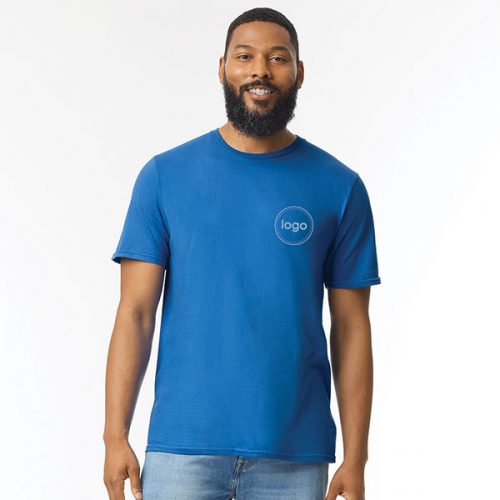
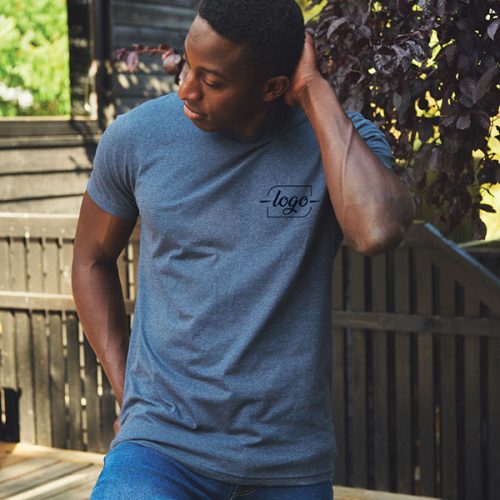
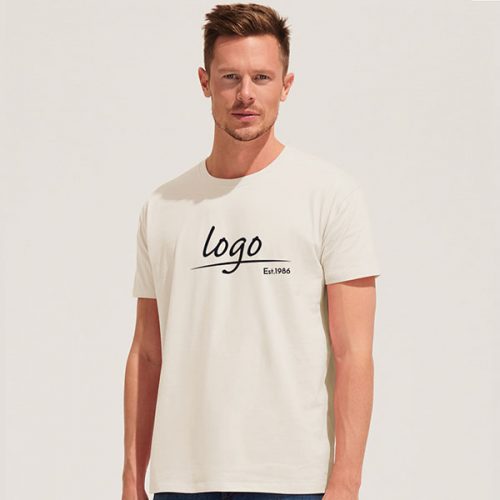
The most common T-shirt logo positions are left chest, full front, full back, sleeve and nape of neck. For events and campaigns, a large front or back print gives maximum visibility. For staff uniforms, a smaller left chest logo often looks more professional and is easier to wear every day.

For the cleanest result, send your logo as a vector file such as AI, EPS or PDF. High-resolution PNG files can also work for some designs. Before production, we provide an artwork proof so you can check logo size, positioning, colours and spelling. For printed garments, Pantone colour matching can be used to keep your brand colours consistent. For embroidered designs, thread colours are matched as closely as possible using professional embroidery thread charts.

Logo PositionBest ForBuyer Tip
Left ChestStaff uniforms and retail teamsSmart, subtle and easy to wear regularly
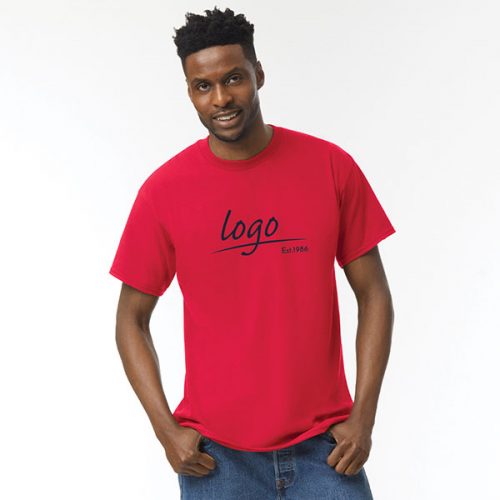
Full FrontCampaigns, giveaways and merchandiseGives high visibility but should not be overcrowded
Full BackEvents, volunteers, sponsors and team rolesUseful when staff need to be identified from behind
SleeveSponsor logos and secondary brandingWorks well as an add-on to main chest or back branding
Nape of NeckPremium merchandise and subtle brandingA neat detail for fashion-led or retail-style T-shirts

Can You Mix Sizes, Colours and Garment Styles?

Yes. Most branded T-shirt orders include a mixture of sizes, and many businesses also split garment colours between departments, teams or campaign groups. You can usually mix sizes and colours while still benefiting from bulk pricing, provided the logo design, print size and branding method remain the same across the order.

If you need different logos, individual names, sponsor logos or separate artwork positions, we can quote those as separate production setups. This is common for charity events, teamwear, clubs and campaigns with multiple sponsors.

It is also worth thinking ahead. If you are likely to need repeat orders for future events, staff onboarding or seasonal campaigns, keeping your artwork consistent can make reordering much easier. Businesses that order branded T-shirts regularly often choose one core garment style and colour palette so the brand remains consistent across every campaign.

Our Branded T-Shirt Ordering Process

  1. Choose your T-shirt: Select the style, colour, size range and quantity you need.
  2. Send your artwork: Upload your logo or design, preferably as a vector file.
  3. Receive a quote: We confirm the best branding method, pricing and production options.
  4. Approve your proof: You check logo placement, sizing and colours before production begins.
  5. Production: Your T-shirts are printed or embroidered to the agreed specification.
  6. Delivery: Orders are shipped across the UK, with local support available near Preston and Lancashire.

Related Clothing Categories

If T-shirts are only one part of your uniform or campaign, you may also want to browse our branded polo shirts for smarter staff uniforms, custom hoodies for colder weather and merchandise, branded sweatshirts for casual workwear, or hi-vis and safety clothing for site teams and outdoor workers.

Branded T-Shirt FAQs

What is the best T-shirt material for printing?

For most printed T-shirt orders, cotton or ringspun cotton gives a smooth surface and a comfortable finish. Polycotton and performance fabrics can also work well, but the best option depends on your design, quantity and how the T-shirts will be used.

Which printing method lasts longest on T-shirts?

Screen printing is highly durable for larger runs and simple designs, while DTF transfers are excellent for full-colour artwork and smaller quantities. The longest-lasting option depends on the garment, artwork and wash conditions.

Can we order mixed T-shirt sizes and colours?

Yes. You can usually mix sizes and garment colours within the same order. Bulk pricing can normally still apply as long as the same logo, print size and branding method are used across the run.

Can you print on the front and back of a T-shirt?

Yes. Common branding positions include left chest, full front, full back, sleeve and nape of neck. Front and back prints are especially popular for events, charity campaigns, sponsors and staff uniforms.

Do you offer organic or recycled branded T-shirts?

Yes. Organic cotton and recycled fabric T-shirts are available for businesses that want a more sustainable promotional clothing option. These are popular for eco campaigns, wellness brands, universities and premium merchandise packs.

Can we see a sample before ordering printed T-shirts?

Plain samples can usually be arranged so you can check sizing, fit, fabric weight and garment quality before placing a bulk order. We also provide a digital artwork proof before production.

How long does a branded T-shirt order take?

Standard production is usually around 10 to 14 working days from artwork approval. If you have a fixed event date or campaign launch, let us know as early as possible so we can advise on the best production route.

Can you print individual names or numbers?

Yes, individual names, numbers and personalisation can be added to suitable T-shirts. This is often used for teamwear, charity events, clubs and staff groups, and may require separate setup or production handling.